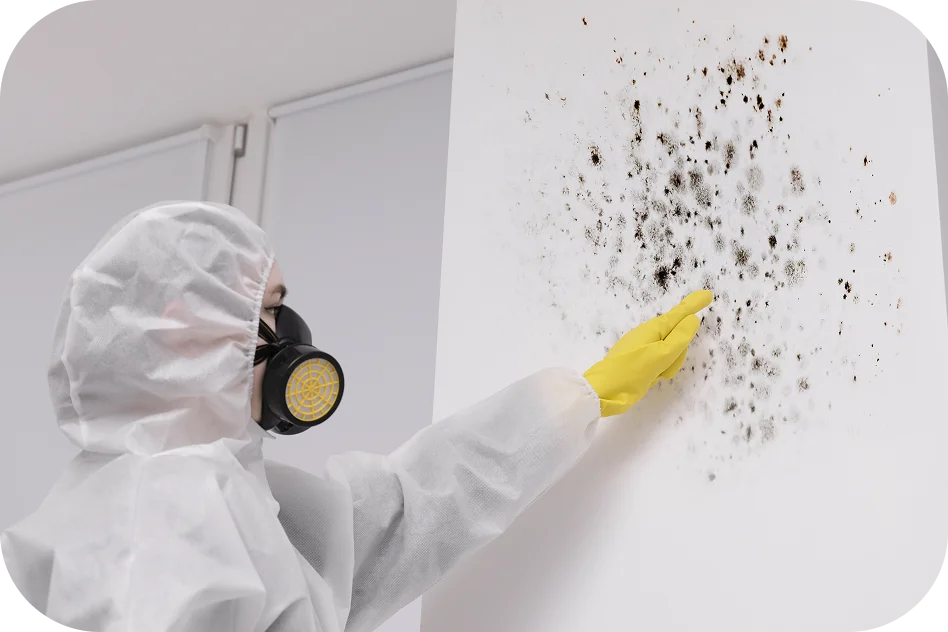
Key Takeaways
- Mold testing can identify mold in collected samples, but it cannot guarantee that an entire building is mold-free.
- Test accuracy depends on sample location, timing, collection methods, and laboratory analysis.
- Air sampling detects airborne mold spores, while surface sampling identifies mold on specific materials.
- A negative result does not rule out hidden mold or moisture problems.
- A positive result does not automatically mean a building is unsafe.
- Professional mold testing is most useful when it answers a specific question about a suspected mold problem.
- Fixing moisture sources and addressing mold growth are essential, regardless of the test results.
Mold testing can help identify mold spores in a building, but it does not always provide a complete picture of a mold problem. The accuracy depends on the testing method, sample collection, location, and conditions at the time of testing.
Mold testing can detect mold in collected samples, but a negative result does not guarantee that a building is mold-free. Air samples represent conditions at a particular time, and hidden mold may not be captured. The U.S. Environmental Protection Agency (EPA) states that routine mold sampling is often unnecessary when visible mold is already present.
How Accurate Is Mold Testing?
Mold testing can provide useful information when performed correctly and for a clear purpose. However, no single test can reliably determine the full extent of mold growth throughout an entire building.
Testing may identify mold spores in air or on surfaces. The results can help investigators understand a suspected problem, but they must be interpreted alongside a visual inspection and an assessment of moisture.
There is also no universally accepted federal threshold for airborne mold spores that defines a home as safe or unsafe. Therefore, a mold test cannot provide a simple pass-or-fail result for indoor air quality.
What Factors Affect Mold Testing Accuracy?
Several factors can influence mold test results.
1. Sample Location
Mold may grow behind drywall, beneath carpets, inside wall cavities, or around plumbing leaks. An air sample collected in another room may not detect spores from these hidden areas.
Testing the right locations is essential for obtaining useful results.
2. Timing of the Test
Airborne mold spore levels can change over time. A short air test only reflects the conditions during the sampling period.
A test conducted when mold spores are not circulating may fail to identify a problem that becomes apparent under different conditions.
3. Sampling Technique
Incorrect sampling, contaminated equipment, too few samples, or poorly selected sampling locations can produce misleading results.
Professional testing requires an appropriate sampling plan and careful interpretation.
4. Moisture Conditions
Mold grows when moisture conditions allow it. Leaks, condensation, flooding, and persistently damp materials can create conditions for mold growth.
A mold test alone does not identify the source of moisture. Inspecting for water damage and correcting moisture problems are essential parts of an effective investigation.
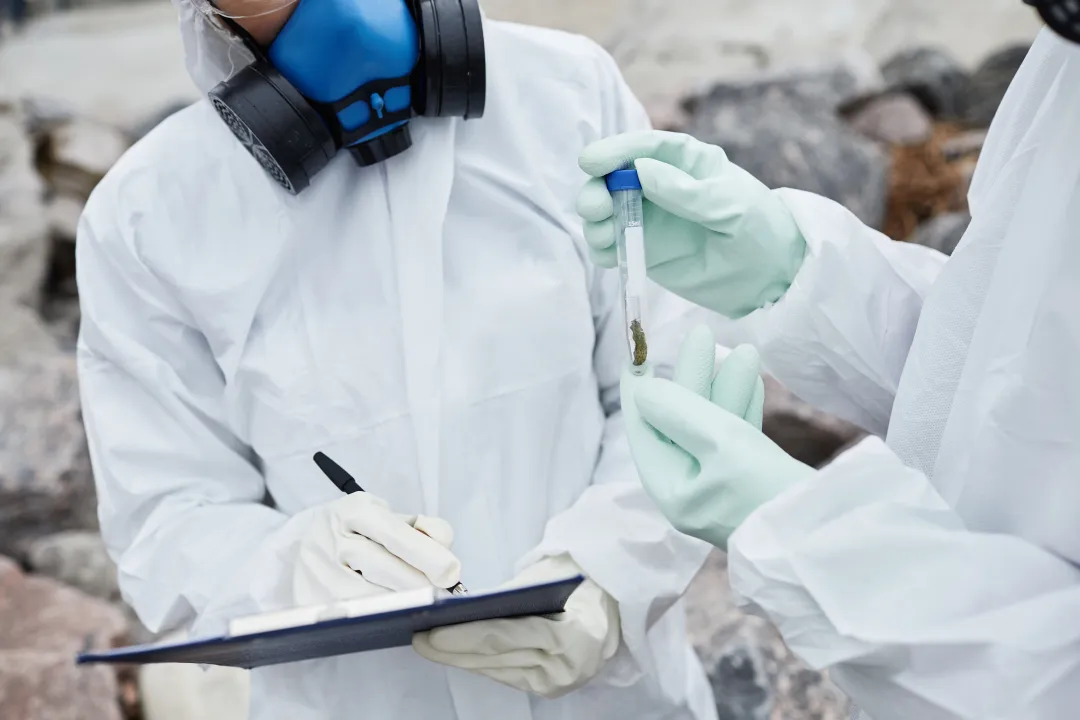
Which Mold Testing Method Is Most Accurate?
Different testing methods answer different questions. The best method depends on whether the goal is to detect airborne spores, examine a suspicious surface, or investigate possible hidden mold.
Air Sampling
Air sampling collects airborne particles, including mold spores, for laboratory analysis.
It can help assess airborne mold at a particular location and time. However, it may miss hidden mold or fail to capture spores that are not airborne during testing.
Air sampling results cannot, by themselves, determine whether a building is safe or whether occupants will develop health problems.
Surface Sampling
Surface sampling collects material from a suspected moldy area using methods such as swabs or tape samples.
It can help determine whether mold is present on a particular surface. However, it does not establish how much mold may be growing elsewhere in the building.
Surface sampling may also be useful when evaluating whether a specific area has been adequately cleaned after remediation.
Bulk Sampling
Bulk sampling involves collecting a piece of a material, such as drywall, insulation, or carpet, for examination.
It can help identify mold within the sampled material. However, the result applies to that sample and does not establish the condition of every building material.
Visual Inspection
A visual inspection looks for visible mold, water stains, damp materials, condensation, and other signs of moisture problems.
Although it does not identify every mold species, a thorough inspection can be more useful than routine air sampling for identifying moisture and mold problems that need attention. The National Institute for Occupational Safety and Health (NIOSH) emphasizes the value of visual inspections and identifying musty odors.
Can Mold Testing Give a False Negative?
Yes. A false negative occurs when a test does not detect mold even though mold is present.
This can happen when:
The sample is collected away from the affected area.
Mold is hidden inside a wall or beneath flooring.
Airborne spores are not present in the sample at detectable levels.
Too few samples are collected.
Sampling or laboratory procedures are inadequate.
A negative result should not override clear evidence of moisture damage, visible mold, or a persistent musty odor.
If you suspect hidden mold, a qualified professional can investigate the affected areas and determine whether additional sampling is appropriate.
Can Mold Testing Give a False Positive?
Mold spores are common in both indoor and outdoor environments. A positive result does not automatically mean a building has a serious mold problem.
A sample may detect ordinary background spores that entered through windows, doors, or ventilation.
The significance of a positive result depends on the sampling location, the types of mold detected, the building's condition, and other evidence of moisture or mold growth.
A laboratory result should therefore be interpreted in context rather than treated as proof of a hazardous indoor environment.

Does Mold Testing Tell You If Your Home Is Safe?
No. Mold testing alone cannot determine whether a home is safe for every occupant.
There are no universally accepted federal health-based standards for airborne mold concentrations in homes. Mold test results cannot reliably predict whether a particular person will experience symptoms.
People may respond differently to mold exposure, particularly those with allergies, asthma, or other respiratory conditions.
If mold is visible or there is clear evidence of dampness, the priority is to address the moisture source and remove the mold appropriately. Testing is not always necessary before taking action.
When Should You Get Professional Mold Testing?
Professional testing may be useful when:
You suspect hidden mold but cannot locate the source.
A building has a history of water damage.
A specific question needs to be answered before or after remediation.
You need documented findings for a property-related investigation.
A qualified professional determines that sampling will help guide the next steps.
Ask what the test will establish, what its limitations are, and how the findings will affect the recommended action.
Conclusion
So, how accurate is mold testing? Mold testing can accurately identify mold in collected samples when appropriate methods are used, but it cannot guarantee that an entire building is mold-free or establish whether the building is safe for every occupant.
Sample location, timing, collection technique, and interpretation all affect the usefulness of the results.
For the most reliable assessment, combine appropriate testing with a thorough inspection for visible mold, moisture damage, and hidden water problems. Most importantly, fix the source of moisture and address confirmed mold growth rather than relying on a test result alone.
Frequently Asked Questions
How accurate are professional mold tests?
Professional mold tests can accurately identify mold in collected samples when proper methods are used. However, results depend on sampling conditions and do not reveal every mold problem in a building.
Can mold exist even if the test is negative?
Yes. Mold may be hidden behind walls, beneath flooring, or in other areas that were not sampled. A negative result does not guarantee a mold-free environment.
How long does mold testing take?
Sample collection may take minutes to several hours, depending on the inspection. Laboratory results commonly take several days, depending on the testing method and laboratory.
Is air testing better than surface testing for mold?
Neither method is universally better. Air testing measures airborne spores, while surface testing identifies mold on a particular material. The appropriate method depends on the suspected problem.
Can a home mold test detect hidden mold?
A home test may detect mold spores in the collected sample, but it generally cannot determine whether mold is growing inside walls or beneath flooring.
Do high mold spore counts always mean a problem?
Not necessarily. Mold spores are naturally present in indoor and outdoor air. Results must be interpreted alongside outdoor comparisons, building conditions, moisture evidence, and sampling methods.
Should you leave your home if mold is detected?
Not automatically. The appropriate response depends on the extent of mold growth, moisture damage, and the occupants' health concerns. Significant contamination or serious symptoms may require professional assessment.
Can mold testing identify the source of moisture?
No. Mold testing can identify mold in a sample, but it does not necessarily locate the source of moisture. A building inspection may be needed to identify leaks, condensation, or other water problems.
Is mold testing necessary after mold removal?
Not always. A thorough visual inspection, correction of moisture problems, and confirmation that affected materials are clean and dry may be sufficient. Additional testing may be useful when there is a specific reason to verify the results.
When should you hire a professional mold inspector?
Consider hiring a qualified professional if you suspect hidden mold, have recurring moisture problems, notice persistent musty odors, or need an assessment after significant water damage. Choose someone who can explain the purpose and limitations of the proposed testing.